

ORIENT — THE MARK

Orient

Role
Product & direction
Studio
Atheam Technologies
Stage
In build, Freetown
Platform
Android, on-device
Year
2026

Study like the internet never left you behind.


Four years ago I gave a TEDx talk asking how we get more young people in Sierra Leone into tech. The question I would ask now is different. Not how do we get them in, but how should they orient themselves when AI is moving faster than the schools and job markets meant to prepare them.

Sierra Leonean university students have phones. Lecturers have laptops. Most have heard of ChatGPT. Almost none of them are using AI in any meaningful way in their academic lives. The gap is not access to tools, because the tools are free and a download away. What is missing is any idea of how to use them well.

Orient is an Android companion that runs its AI on the phone. Lectures arrive as voice notes, readings as forwarded PDFs, past papers as photographs. It turns those into study material without asking anyone to leave the surfaces they already use, and without needing a connection to do it.

In short

In build in Freetown, demoing 2026, with the essay behind it a Gemma 4 Challenge winner in writing.

The thinking in short: meet students inside WhatsApp, run the model on the phone, equip lecturers first, and teach the methods themselves, not just the material.

The challenge

The gap is not access to the tools. The gap is use.

Every AI product on the market is built for someone who has already crossed a line. Someone who lives in browsers, types prompts, manages files in folders, and treats AI as a destination they visit. Sierra Leonean university life does not run that way. It runs in WhatsApp groups. Lectures arrive as voice notes. Readings arrive as forwarded PDFs. Assignments are announced in threads of two hundred messages. Lecturers share outlines, not full notes. Internet is patchy enough that anything needing a constant connection is a sometimes-thing rather than a daily one.

So the people who could benefit most from AI are the ones least served by how it is currently being built and shipped. That is not a small mismatch. Sierra Leone is one of the youngest countries in the world, and the distance between where AI is going and where its students stand is one of the steepest anywhere. It widens every semester.

There is a second problem underneath the first, and it is the one that decides whether any of this is worth building. The easy way to use AI as a student is the worst way: drop in the assignment, copy out the answer, hand it in, learn nothing. The grade arrives and the understanding does not. Students already know this. In Anthropic's study of 81,000 AI users across 159 countries, the people most likely to have witnessed cognitive atrophy firsthand were students and their educators. They use AI that way anyway, because nobody has shown them an alternative.

  • WhatsApp is the academic operating system, not a channel
  • Connectivity is a sometimes-thing; a sometimes-tool is not a habit
  • Lecturers share outlines; students build notes from fragments
  • The shortcut is the default because nothing else has been offered

The decisions.

01

WhatsApp stays. We bridge to it.

Context

Academic life here already has an operating system and it is WhatsApp. It carries voice in a culture that talks more than it types, it survives the connectivity, and it is where studying is already organised. The obvious moves were to build inside it or to replace it.

Options considered

  • A new platform for students and lecturers to migrate to (rejected)
  • Integrate through the WhatsApp Business API (rejected)
  • Bridge from WhatsApp with Android's share sheet, and back again

The call

You are inside WhatsApp. You long-press a voice note from your lecturer, or a forwarded PDF chapter, or a photo of a past-paper question, and you tap share. Orient is one of the options. You pick what you want done, and a tap later you have shared the result back into the same group. The companion stays out of the way until you call it.

Evidence

Trying to displace WhatsApp would be both rude and stupid. Building inside it through the Business API would buy regulatory and integration friction for no user benefit. The share sheet is the lowest-friction bridge that respects a habit nobody asked us to change.

Outcome

Nobody has to migrate anywhere. The product meets the content where it already moves, which in Sierra Leone means WhatsApp.
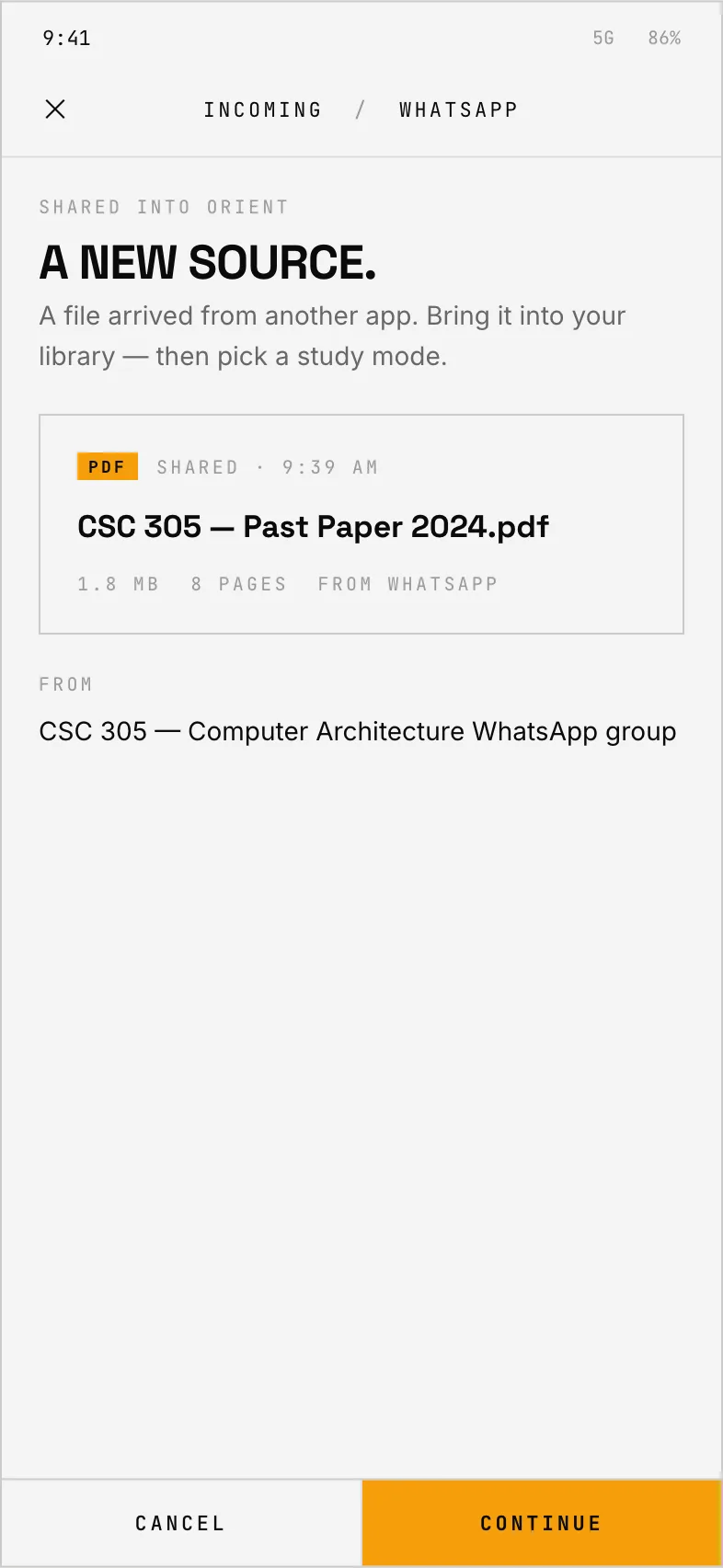
A past paper arriving from a WhatsApp group
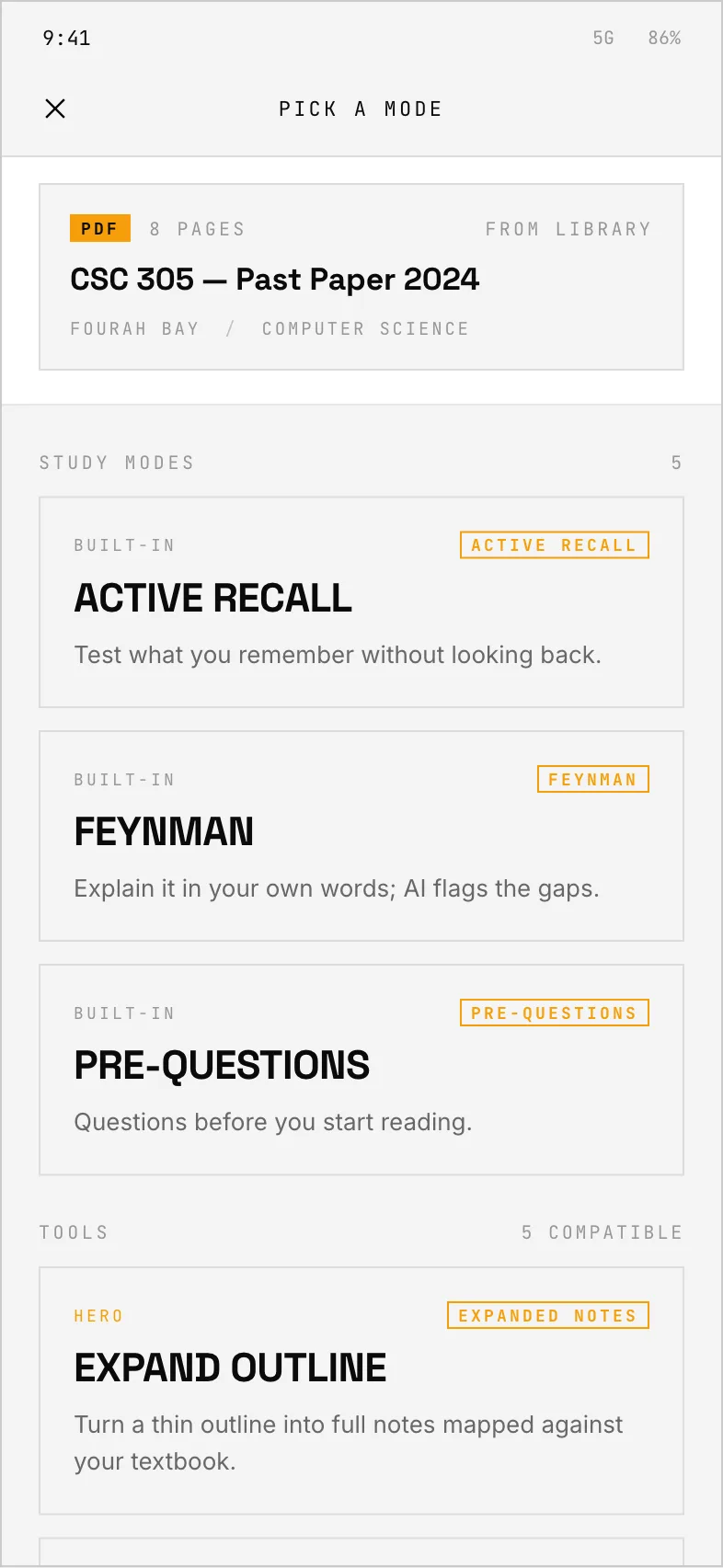
The mode picker open on that source
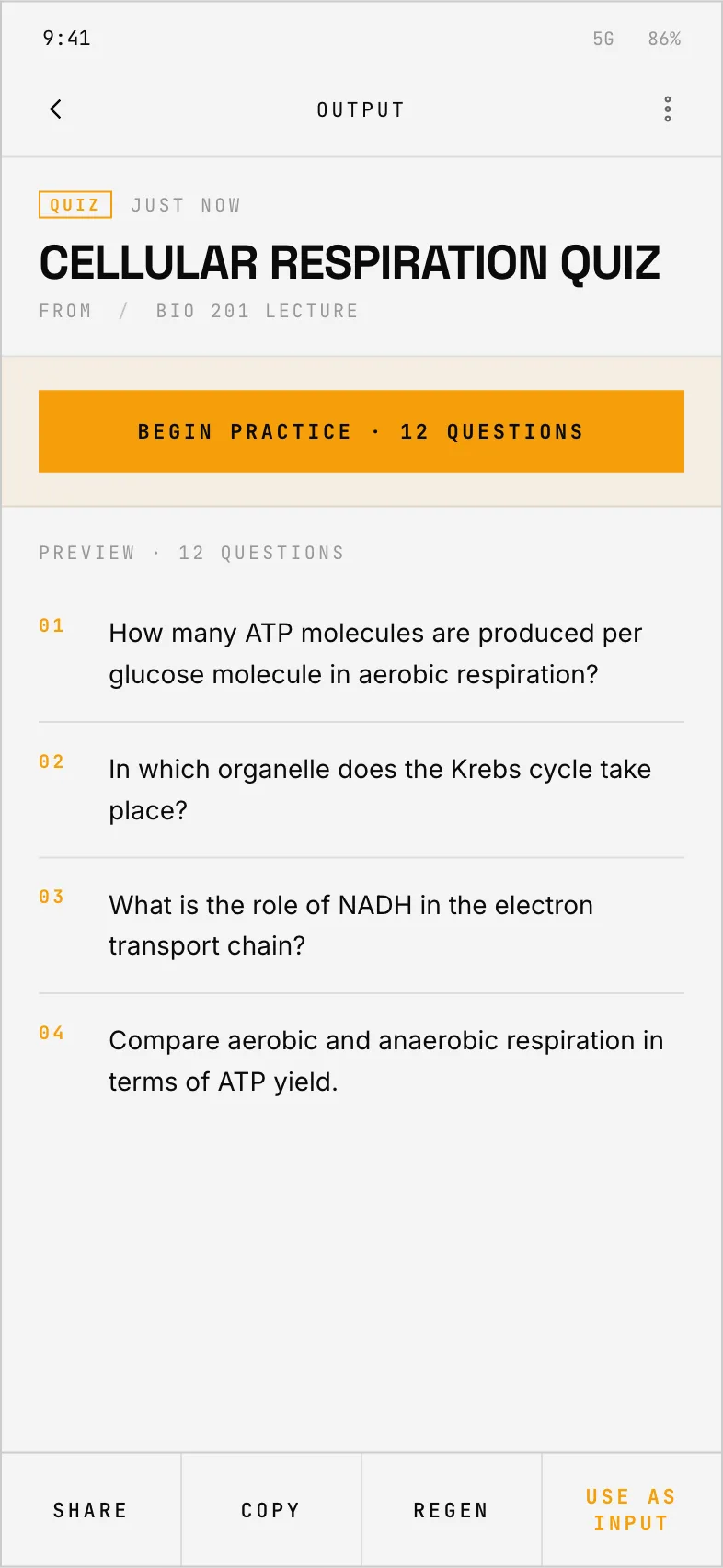
The quiz it produced, one tap from shared back
Arrives from the group, picked from the shelf, shared back. Design sources, drawn in HTML
02

Lecturers first, because they are the multiplier

Context

Almost every education product targets students, because students are the bigger number. Going straight at students is the obvious path and the one everyone takes.

Options considered

  • Target students directly; they are the bigger number (rejected)
  • Equip lecturers and let students arrive through them

The call

Prioritise the lecturer. One who turns a slide deck into a ten-minute audio overview reaches two hundred students with a single action. One who generates a quiz from their own past notes saves three hours of preparation. One who can mark free-response answers against a rubric on their phone gets feedback back the same day instead of next week.

Evidence

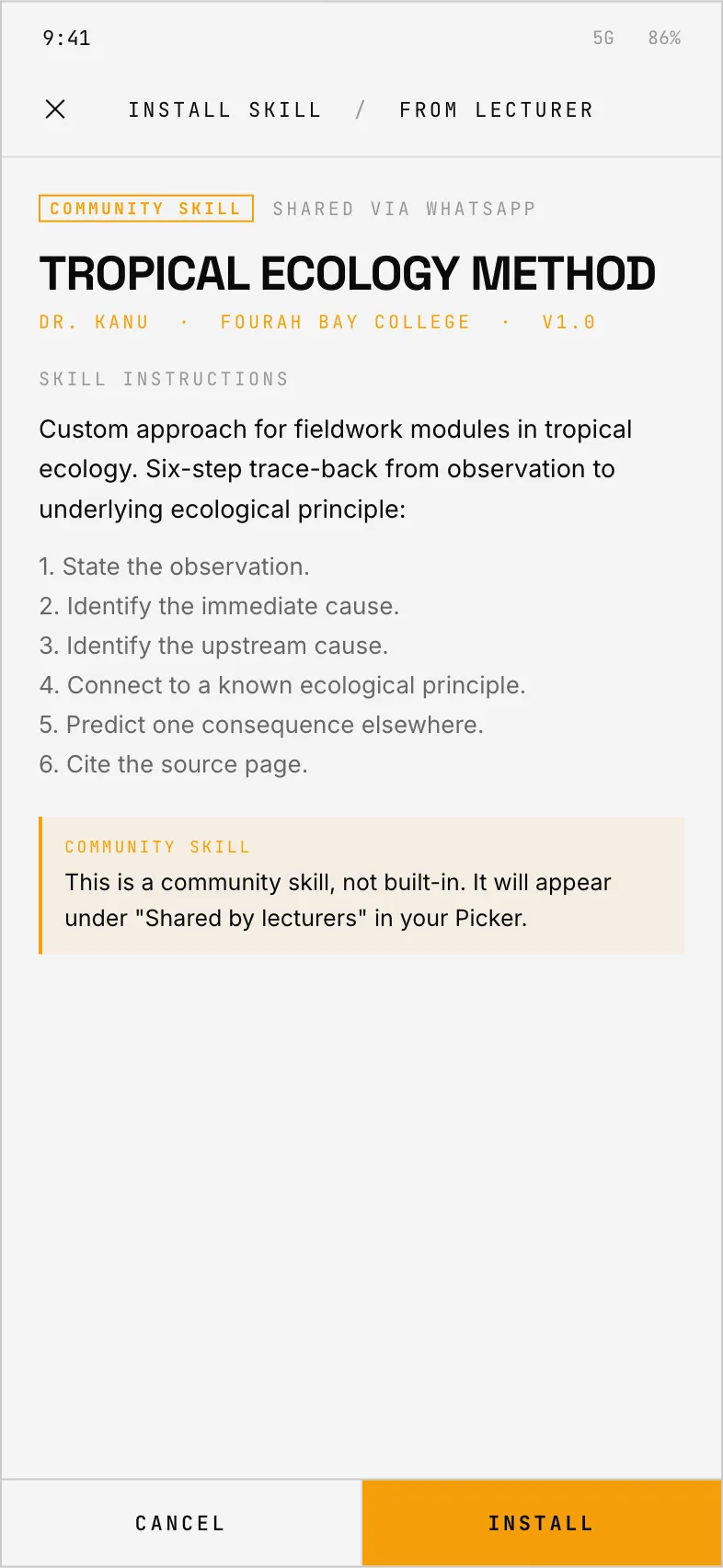
A lecturer can also write their own instructions in plain English (questions in four parts, marks distributed a particular way, examples drawn from West African contexts), save it as a small file, and drop it into the class group. Every student who shares that file into Orient now has a quiz tool that follows their lecturer's exact teaching format. Expertise that used to live only in someone's head becomes distributable infrastructure their students carry.

Outcome

The goal is still students reached. The lever is lecturers equipped, and it cascades through groups and classrooms they already control.

A lecturer's plain-English skill file, previewed before install
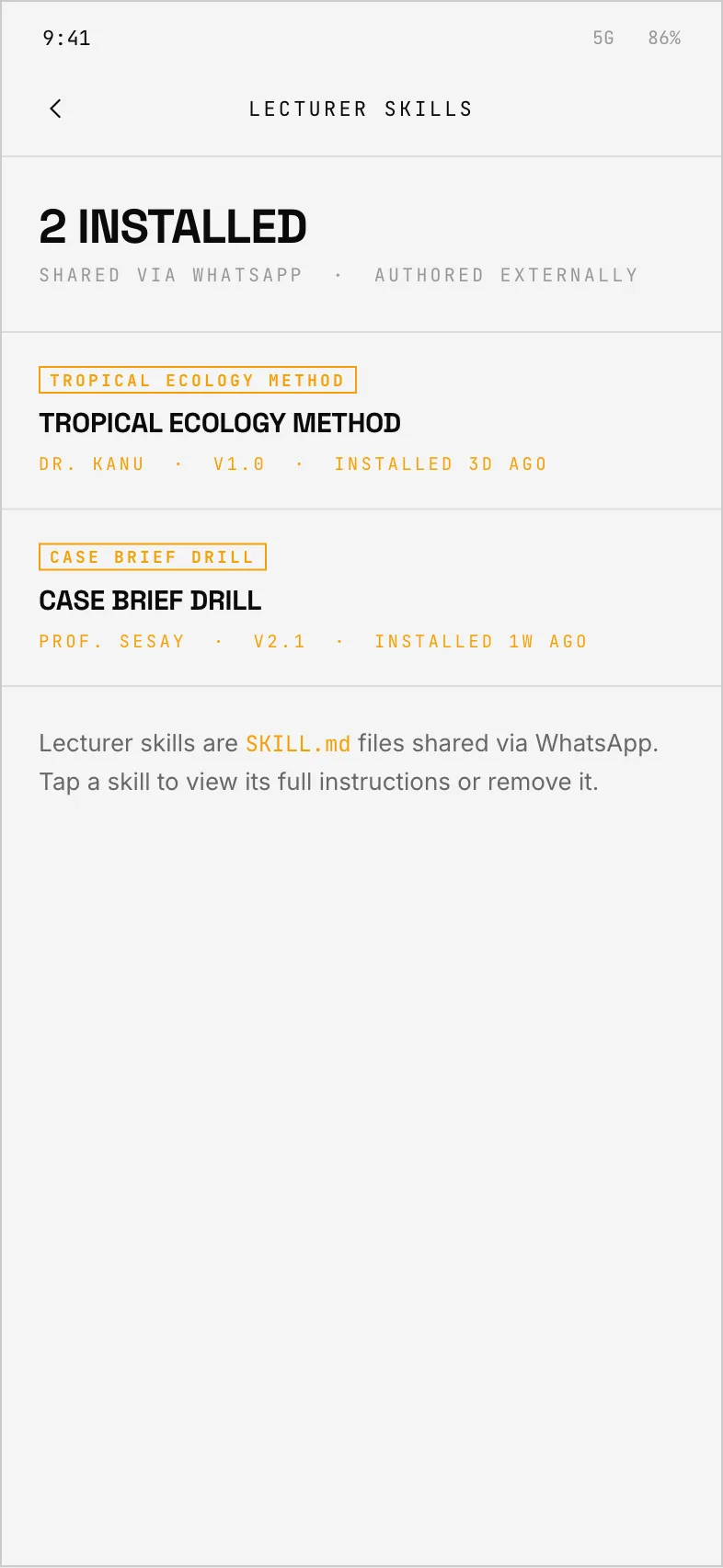
The lecturer skills a student carries, listed in Settings
The lecturer's method, previewed and then carried. Design sources, drawn in HTML
03

The smallest model, on purpose

Context

Until recently, doing AI required a data centre. Your question travelled to someone else's server and the answer came back the same way. That works for people with reliable internet who are relaxed about where their data goes. It describes almost nobody this product is for.

Options considered

  • Cloud models: better output, needs a connection and a subscription (rejected)
  • Wait for on-device models to get good enough (rejected)
  • Run a small model on the phone now, and design around what it can do

The call

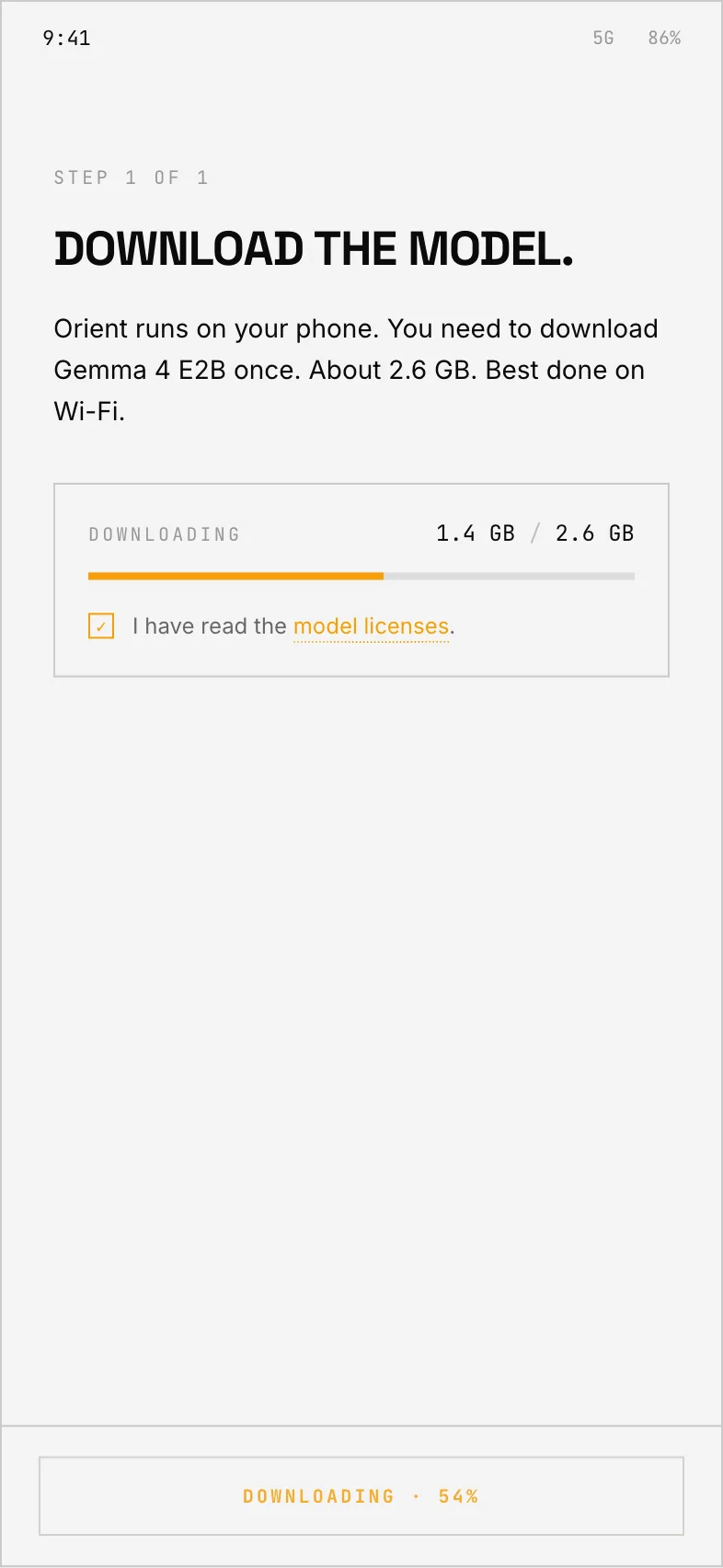
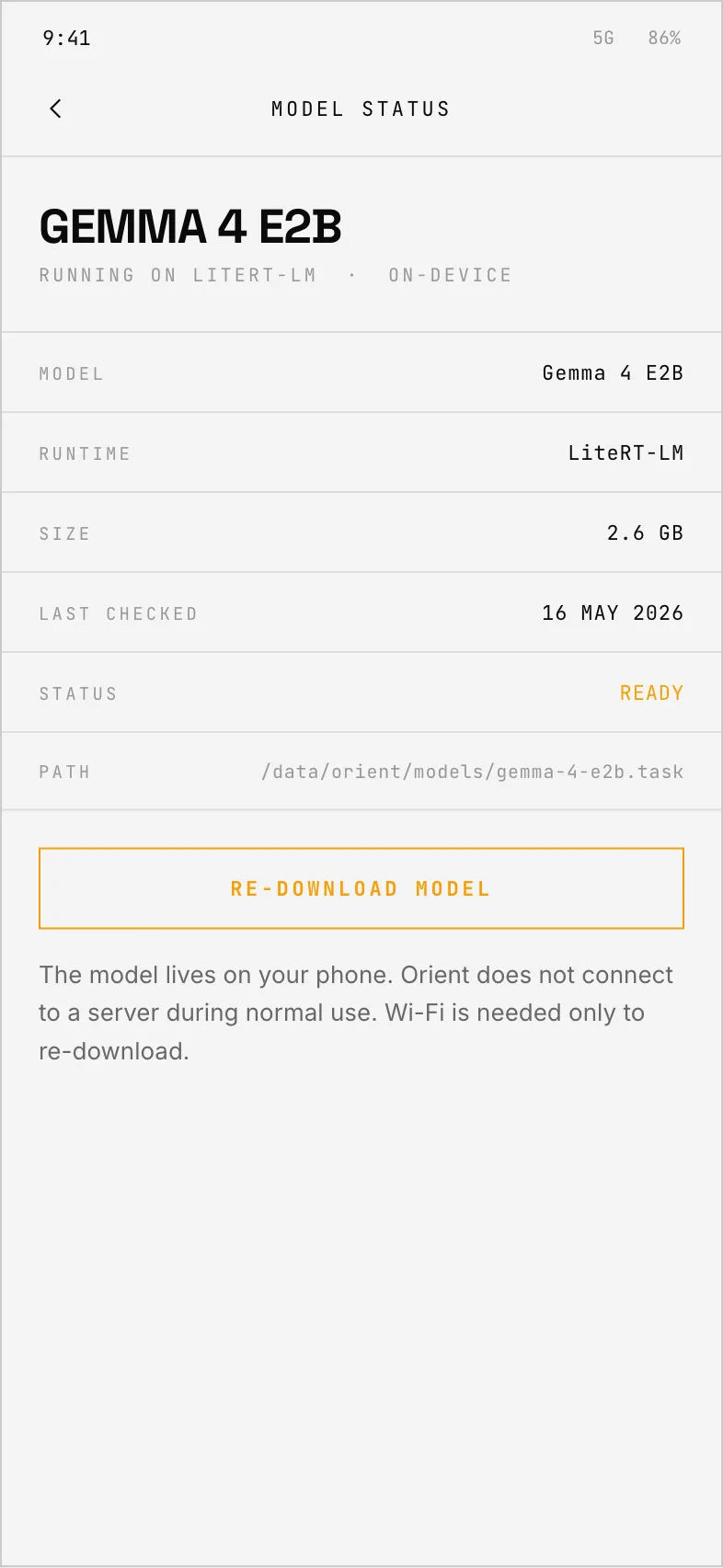
Orient runs Gemma on-device through LiteRT-LM. The model downloads once and then it is yours: working at midnight with no bars, in a lecture hall with no wifi, on the mid-range Android you already carry. It costs nothing beyond the phone you own, and your lecturer's voice notes never leave it.

Evidence

This is not a technical flourish. The constraints are load-bearing: subscriptions priced against local wages, connectivity that comes and goes, hardware that is not a flagship. A tool that only works when the network is good works half the time. A tool that works regardless is one you can build a study habit around.

Outcome

Speed, privacy and reliability all improve at once, and the third one is what changes what is possible here. Design for those constraints honestly and the product works everywhere.

The model downloading once, 2.6 GB on Wi-Fi
The model status screen: downloaded, ready, on-device
Downloads once, then it lives on the phone. Design sources, drawn in HTML
04

Walk people to the better tool instead of faking it

Context

The model that fits on a phone is genuinely smaller than the one in a data centre. It is enough for most daily academic work and it is improving fast, but for synthesising twelve readings or producing a polished audio overview, the bigger cloud tools will simply do better work.

Options considered

  • Build a weaker in-app version of everything so users never leave (rejected)
  • Silently proxy the cloud tools and present the output as ours (rejected)
  • Prepare the materials, then hand the user over to the real tool

The call

When there is a strong connection and the job is heavy, Orient walks you to the tools built for it, NotebookLM and Learn Your Way among them, with the right materials prepared and the right way to use them shown. You do not get a watered-down version inside our app. You get taken to the real one.

Evidence

If the app silently does everything, you never learn what AI can actually do beyond what we decided to build, and you stay dependent on us. If it does the things that belong on your phone and walks you over for the rest, you come away knowing the landscape. You become AI-literate by using Orient rather than just AI-served.

Outcome

That handoff is the part most builders skip. It is the half of the product that is pedagogy rather than utility, and it is why the thing is called Orient.

05

Teach the methods, and open two doors to them

Context

Here is something most students are never told. There are dozens of ways to study and they do not work equally well. Cognitive scientists have spent decades sorting the ones that build retention from the ones that only feel like studying. Re-reading and highlighting, the two most popular methods in the world, sit near the bottom of that evidence. Active recall, spaced repetition, explaining a concept back, asking why something is true, writing questions before you read: these consistently win, often by a lot. Almost nobody is taught them. The students who use them mostly stumbled in by accident or had one good mentor.

Options considered

  • Do the work for the student: summaries in, answers out, fastest path to a grade (rejected)
  • Pick the single best-evidenced method and build the product around it (rejected)
  • Make the student ask for a method every time, from a menu, and nothing else (rejected)
  • Name the methods, then reach them two ways: the student asks, or the reading surfaces them

The call

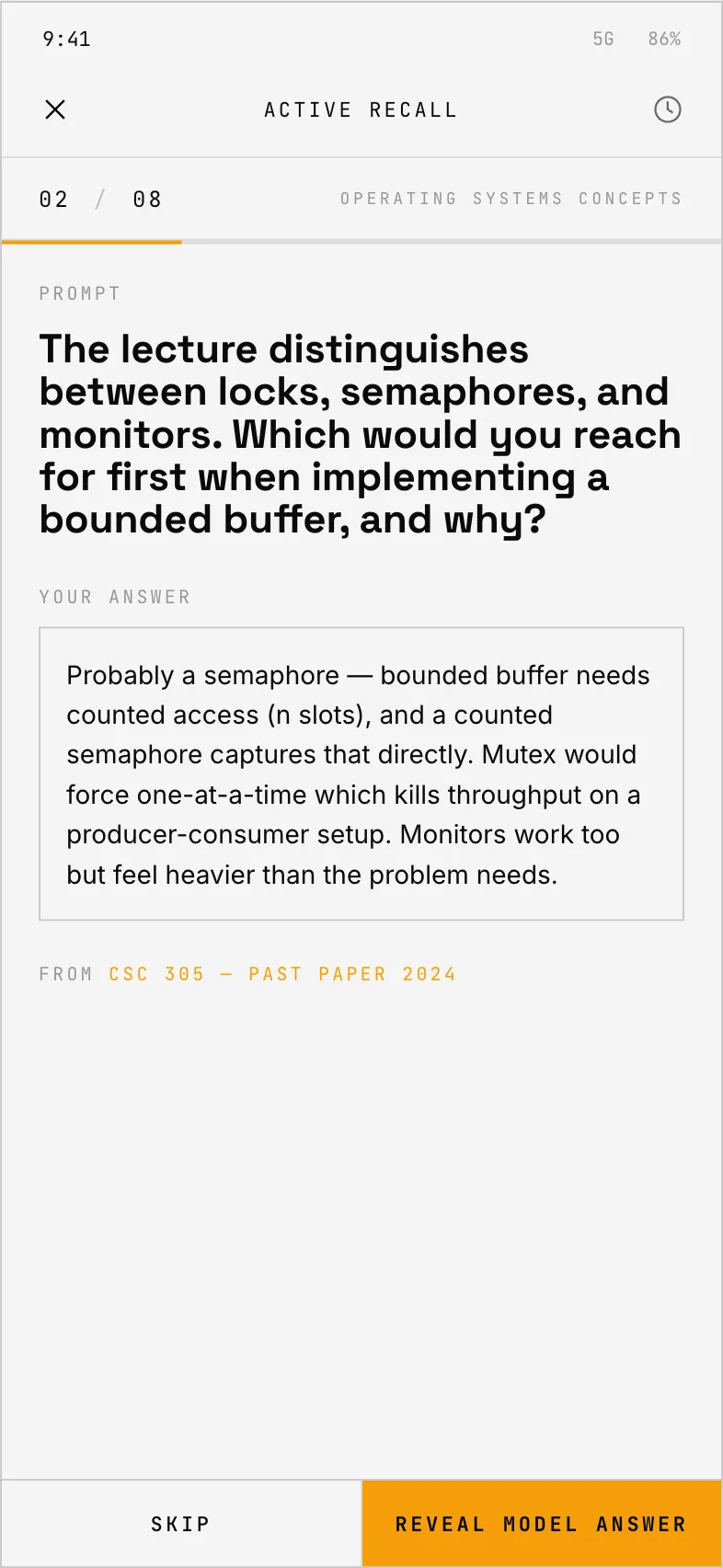
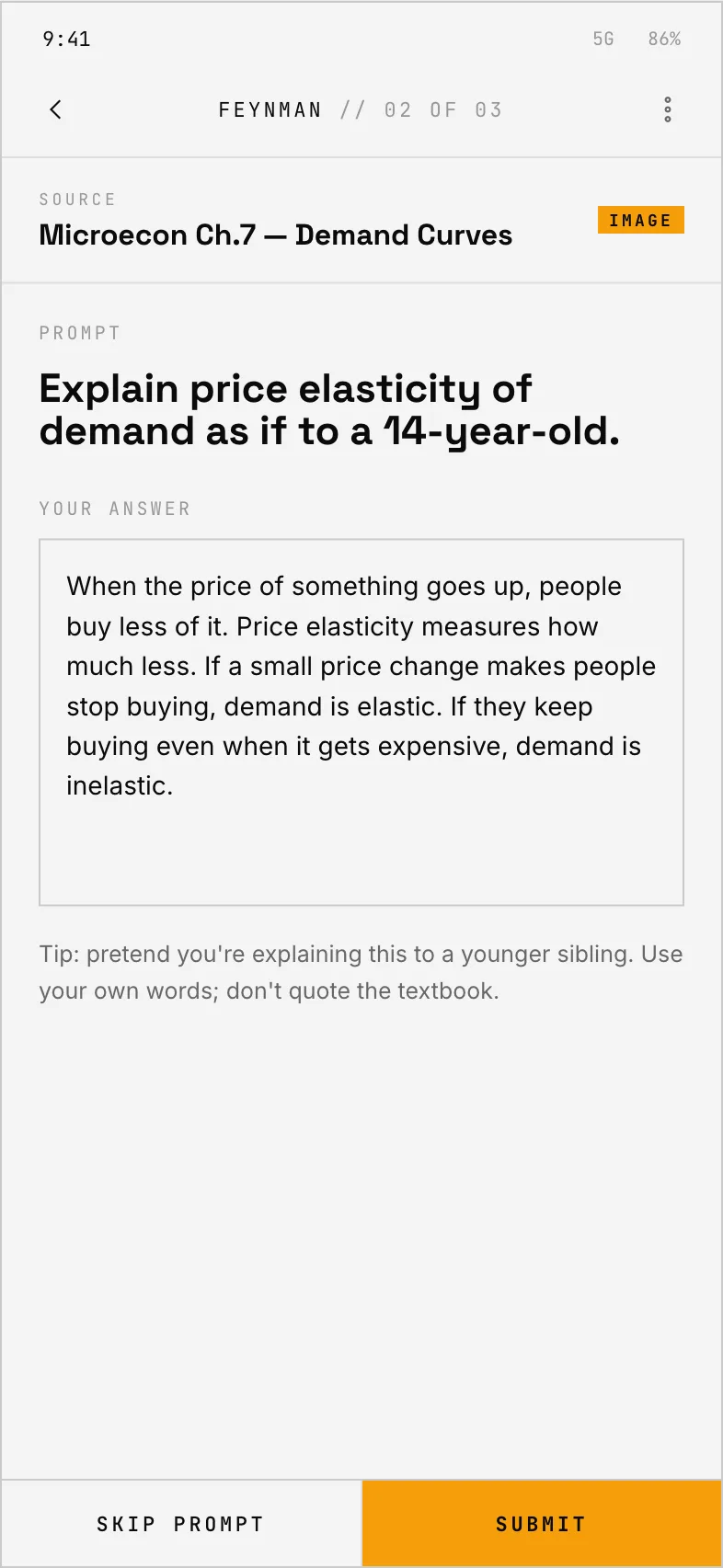
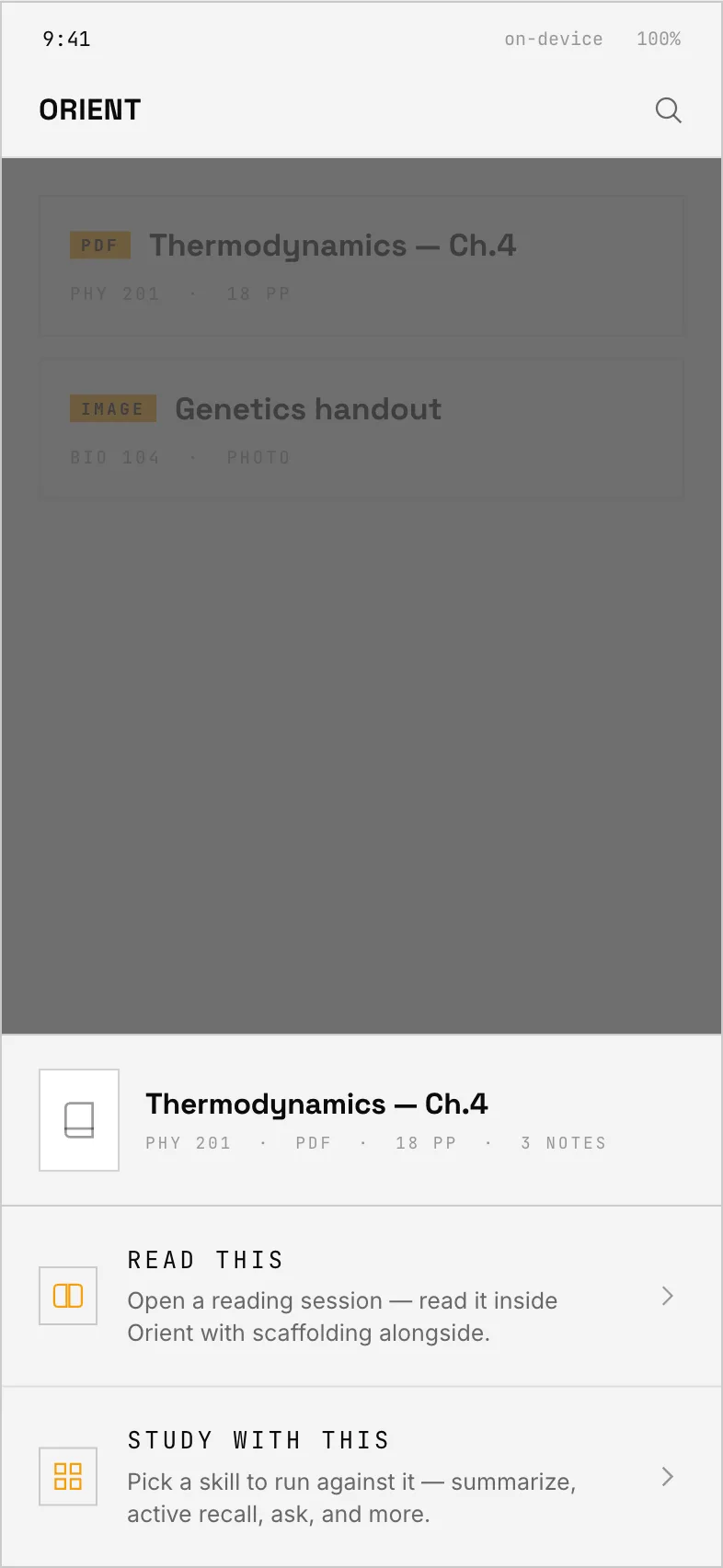
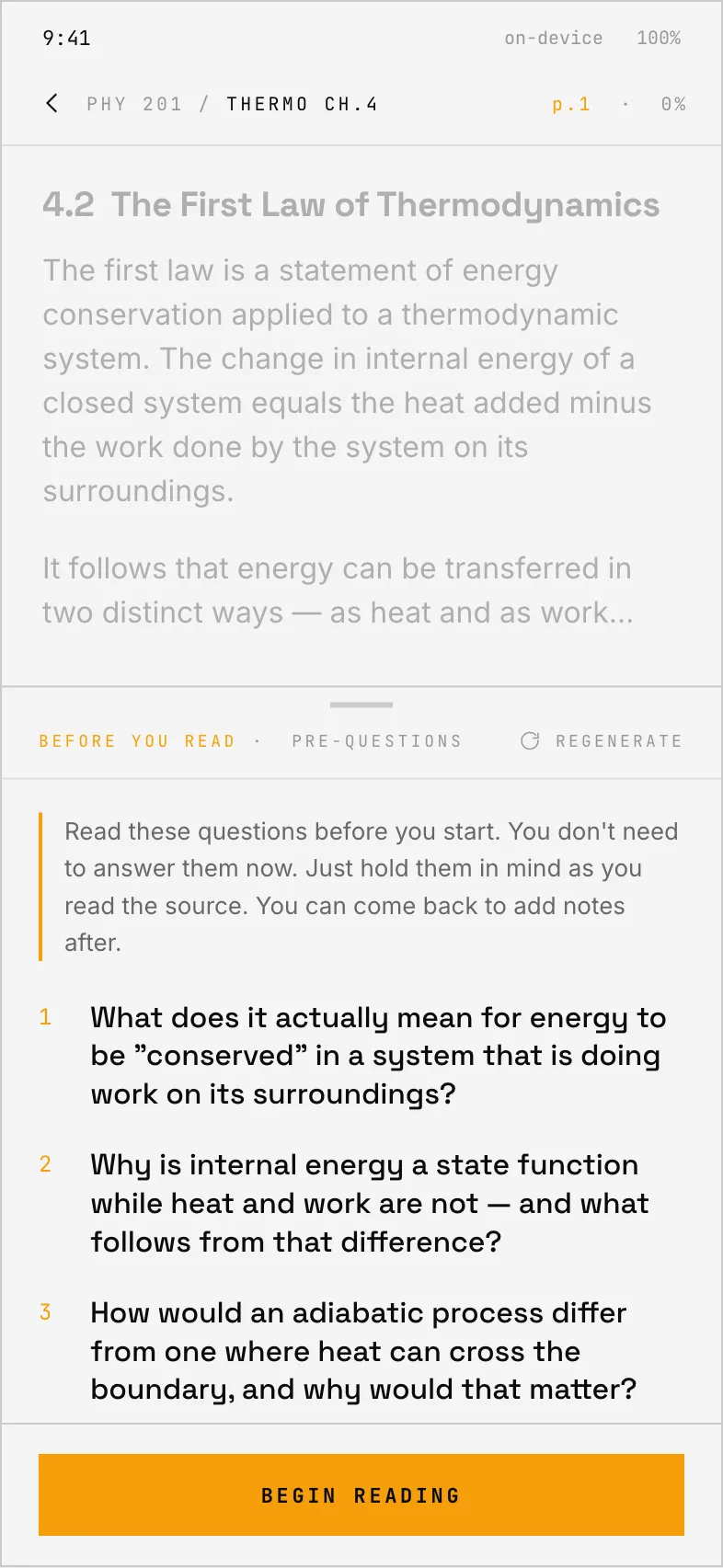
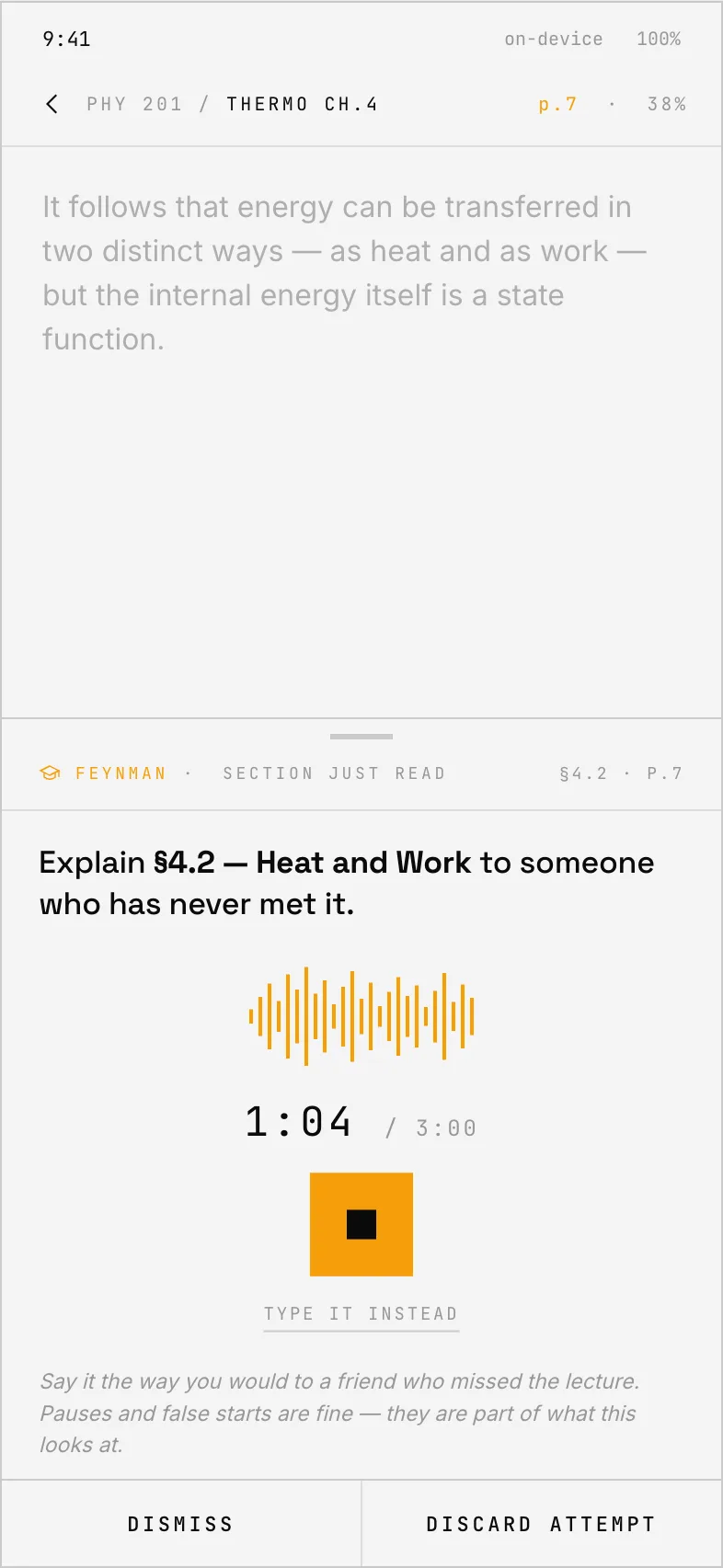
Each method is its own mode. Active recall gives you open questions to answer from memory. Explain it back lets you record yourself teaching a concept aloud, then tells you where you were vague. Why-questions push at the mechanism. Spaced flashcards schedule themselves for long-term retention. Pre-questions frame a chapter before you read it. Tapping a source offers a choice with no default: study with this, which opens the picker, or read this, which opens a reading session where the material renders inline and the methods come to you.

Evidence

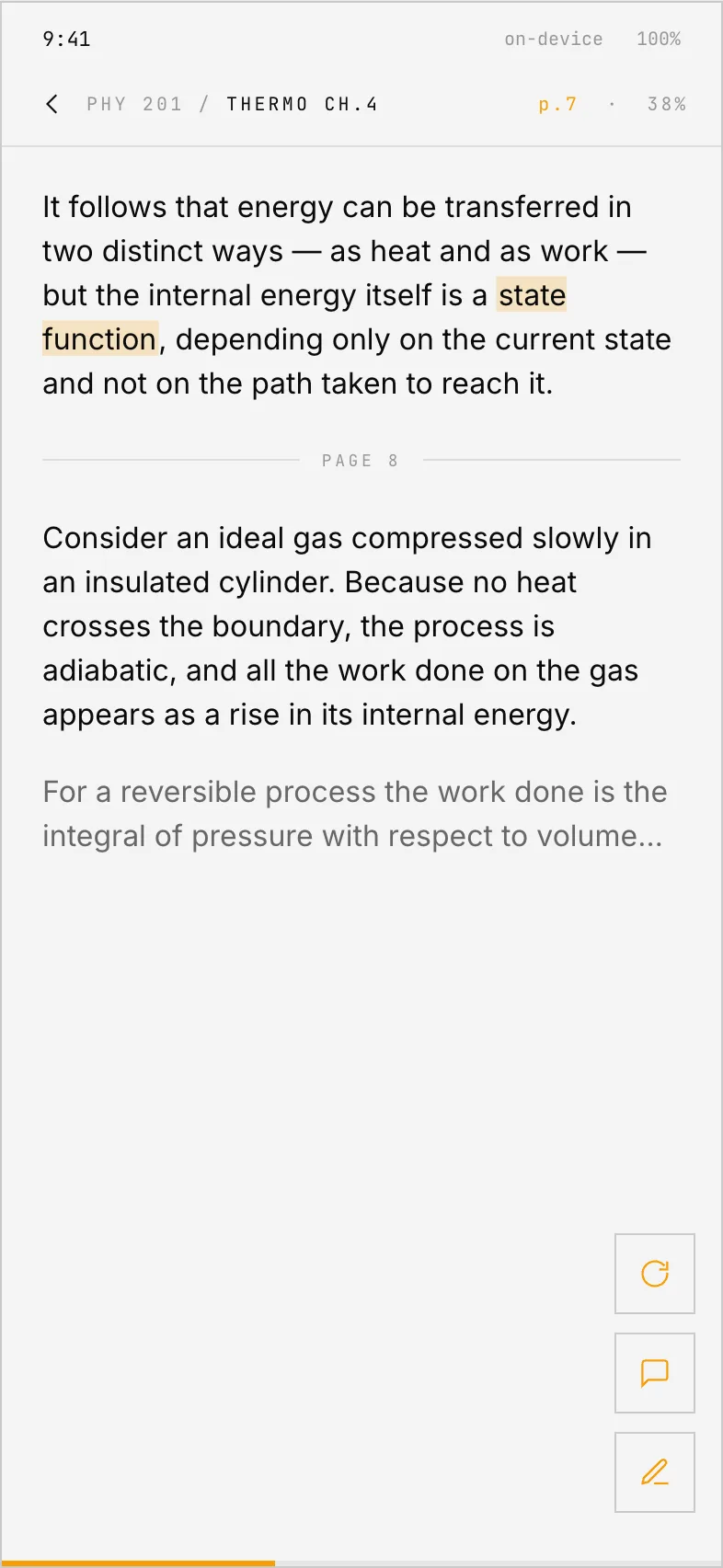
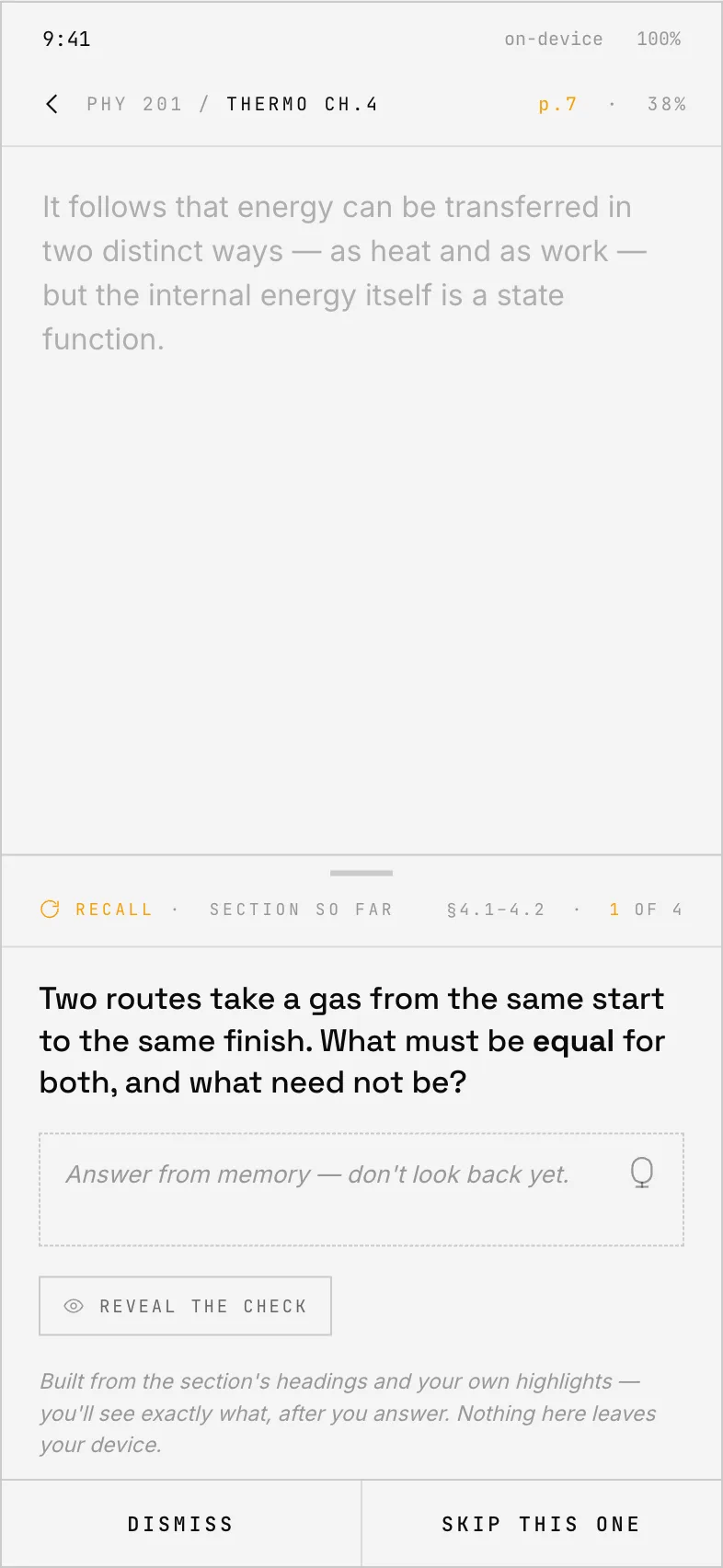
In a session the surface is watching the reading, not the clock. It tracks which chunk you are on, how long you dwell, where you backtrack, and when you have crossed roughly a section it offers recall on the part you just finished. The questions are built from that section's structure and from your own highlights, not from re-feeding the prose back at you, which is closer to what recall actually is. The controls recede while you are scrolling and return when you stop, because stopping is the moment invocation makes sense. Everything runs inline rather than on a separate screen, since the value of recall at a chapter break is that retrieval happens while the material is still in your attention.

Outcome

A student who only knows how to memorise will use AI to memorise faster. A student who can recall, explain back and self-test will use it to do those things better. Same tool, different outcomes, and the difference is the meta-skill this decade actually rewards.

Active recall: answering from memory before the reveal
Feynman: explain it in your own words
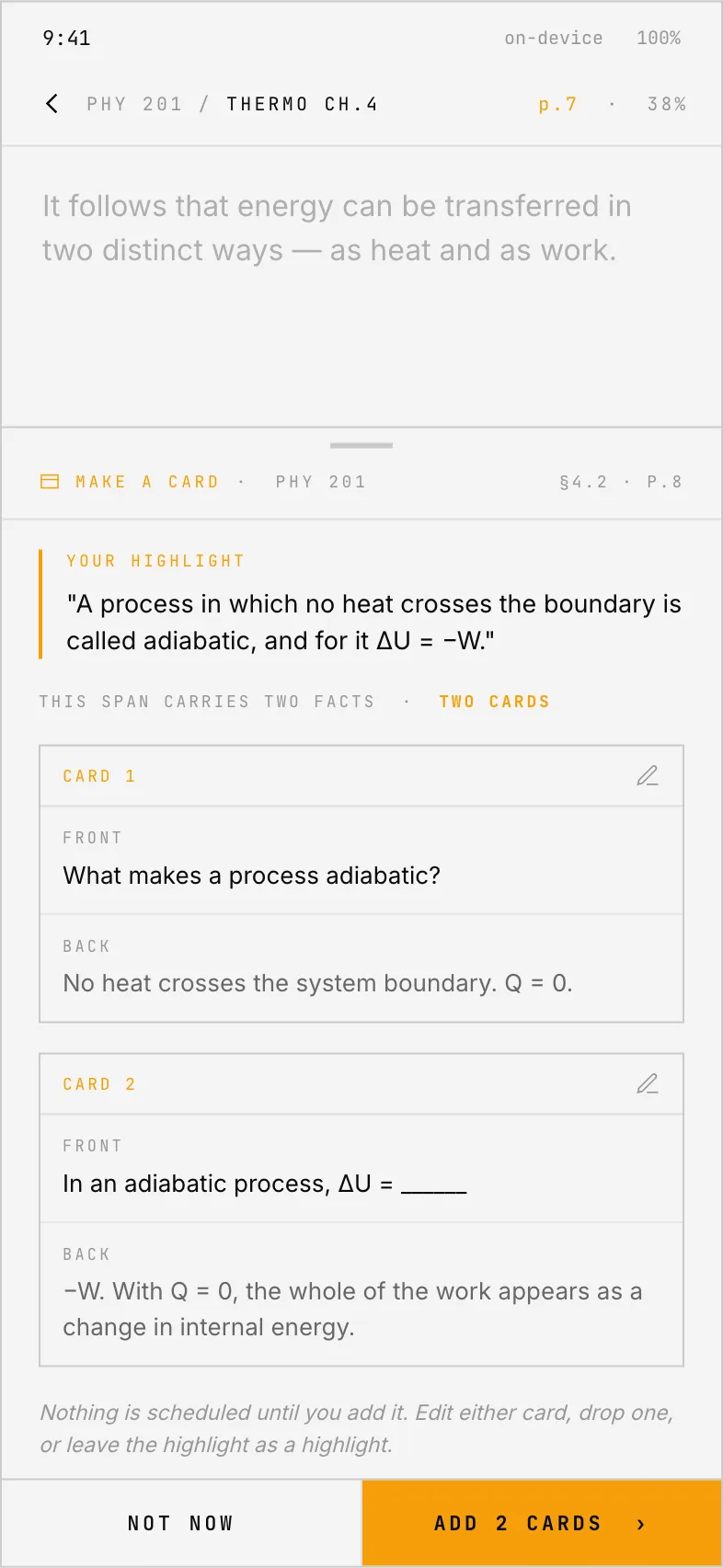
A highlight split into two flashcards, editable before adding
Three of the methods: recall from memory, explain it back, cards from your own highlight. Design sources, drawn in HTML

Designed in HTML.

I design Orient in HTML and CSS. The mockup files are the project’s canonical design source, and every UI pull request translates them exactly. The screens below are those files, captured as drawn, telling one story from the concept note: an outline lands in a class WhatsApp group on Sunday night, and the exam is on Friday. Everything in the frames is invented.

The share-sheet receiver: a file arriving from a WhatsApp group

01The share-sheet bridge

The lecturer drops a past paper in the class group, and the exam is Friday. Long-press, share to Orient.

The mode picker open on the shared past paper

02The picker

You choose what gets made from it: expand it against the textbook, quiz it, recap it.

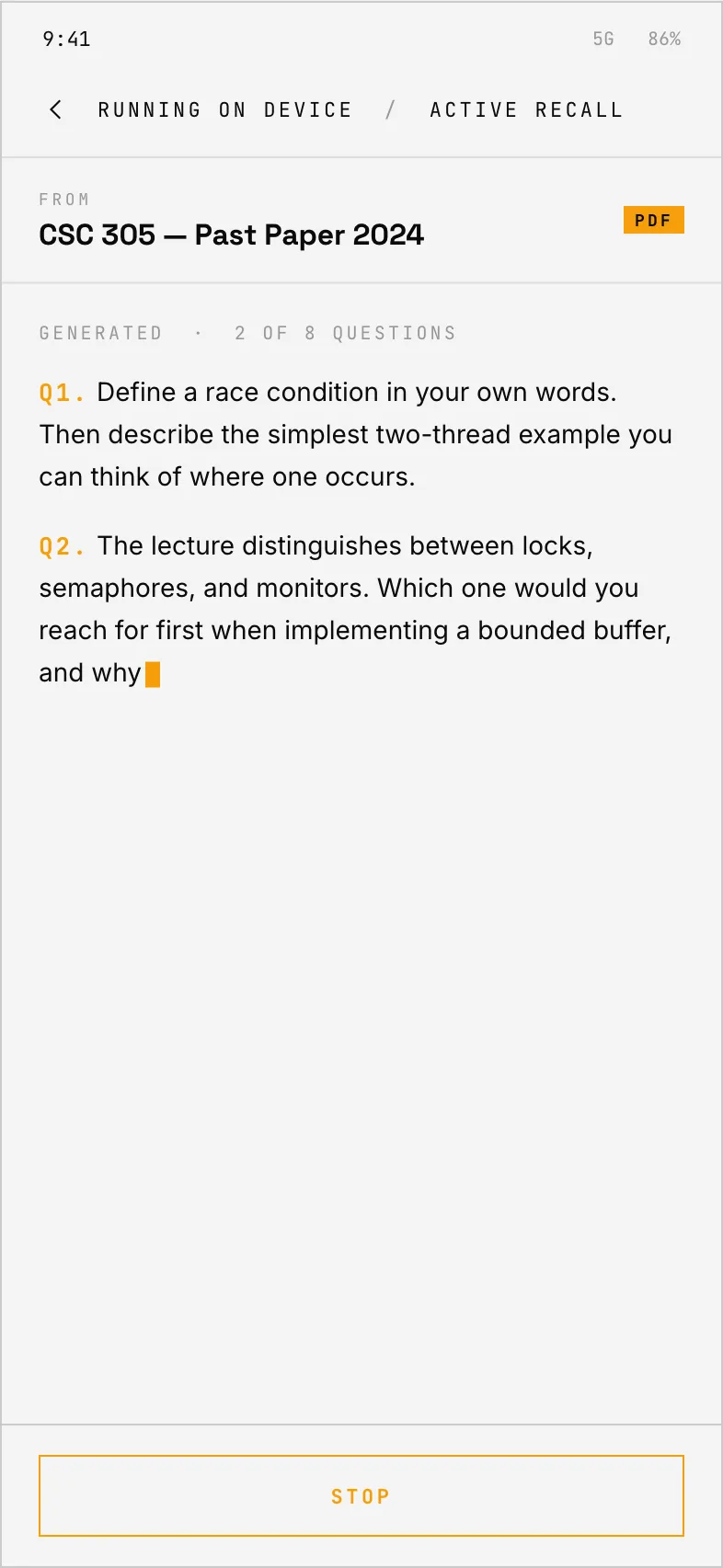
A skill running on-device, questions streaming in

03On-device inference

The model does the work on the phone, connection or none, all the way home.

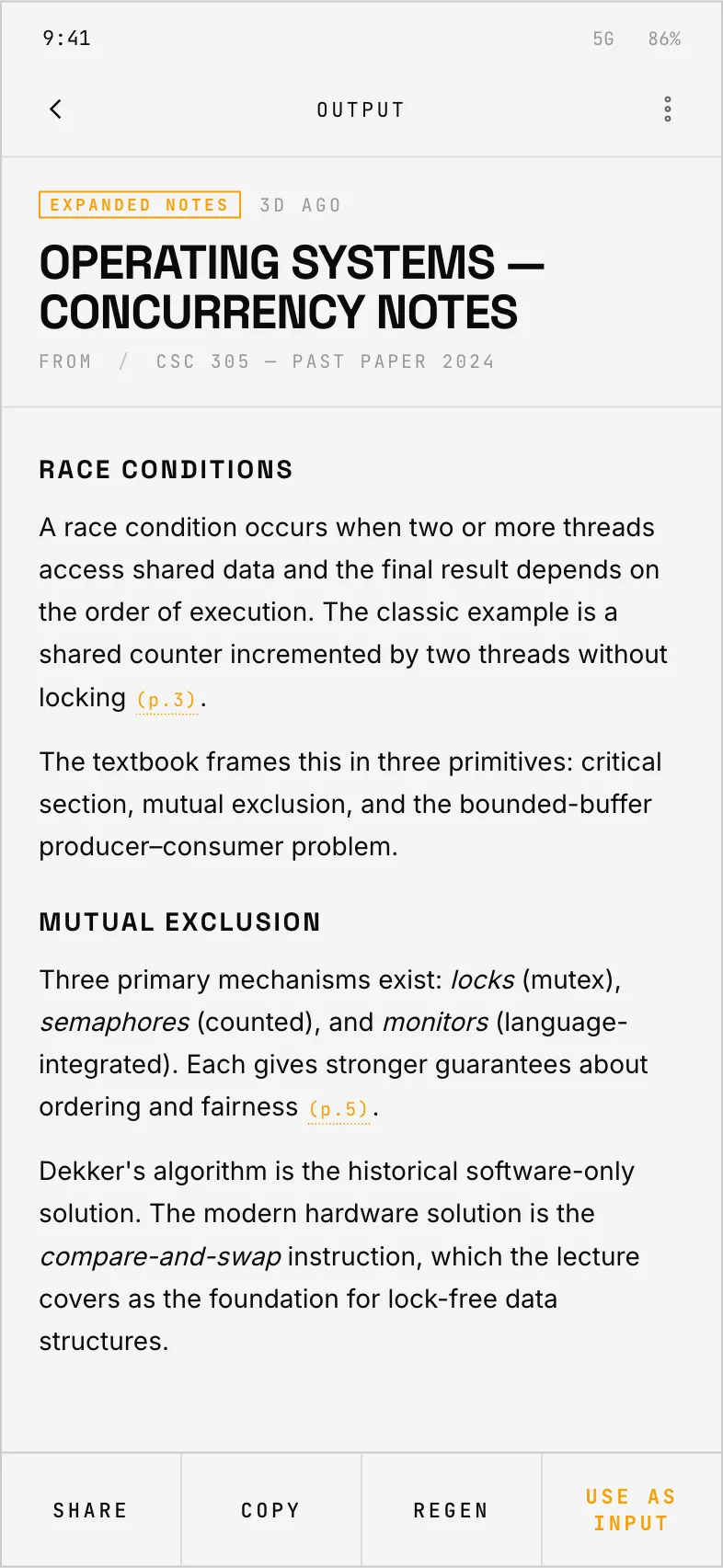
An expanded notes output, rendered with sources cited

04Expanded notes

Mapped to the textbook chapter, sources cited, and shared back into the same group.

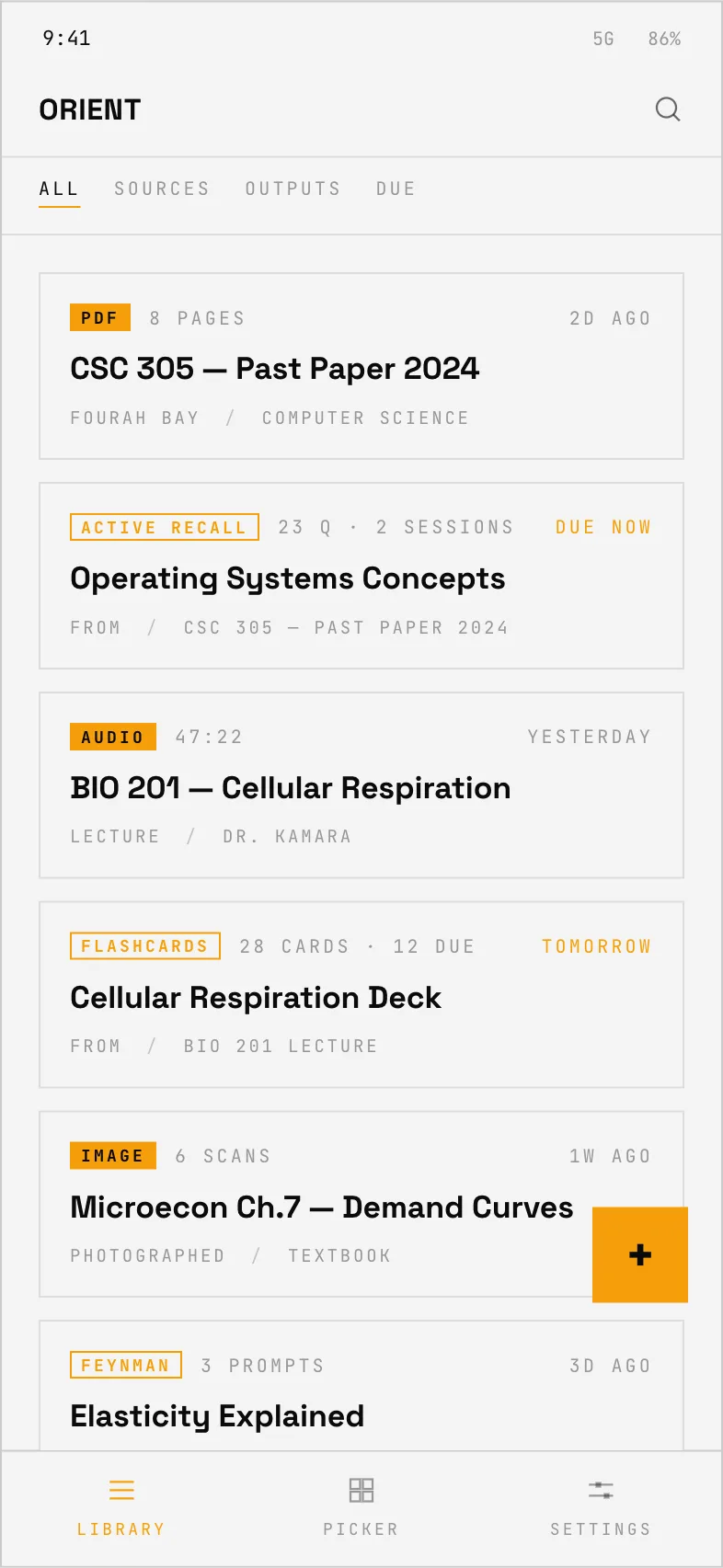
The library: sources and outputs on one shelf, due work surfaced

05The library

Tuesday. You come back, not for something new. The shelf already holds the week.

A source offering two doors: read this, or study with this

06The two doors

Every source offers a choice: study with this, or read this.

Pre-questions framing a chapter before reading begins

07Pre-questions

Reading opens with framing questions, so you read with purpose.

The reading surface with highlights and receding chrome

08The reading surface

The chrome recedes while you scroll and returns when you stop.

Recall offered inline at a section seam

09Recall at the seam

Cross a section and it offers questions on what you just read, answered from memory first.

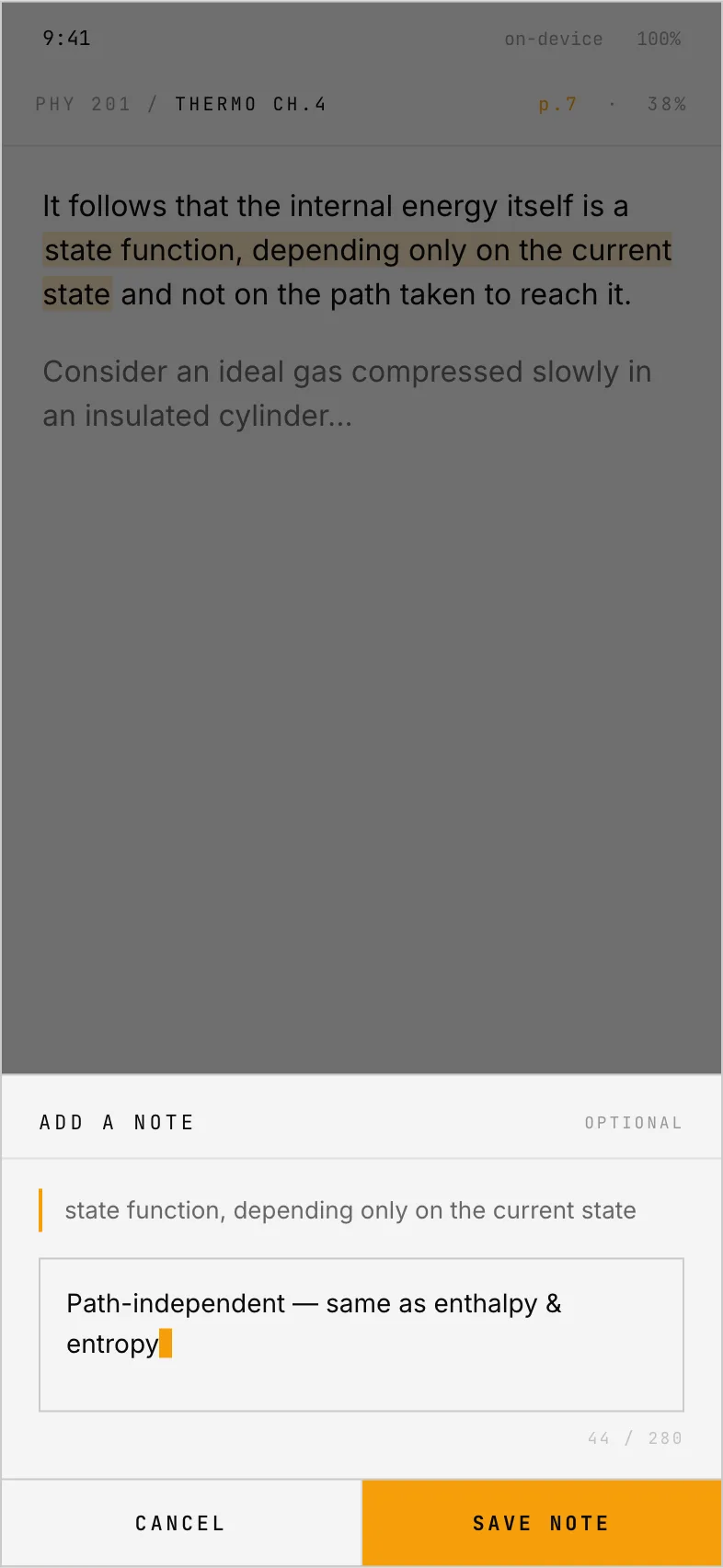
A note being added to a highlighted passage

10Annotations

A highlight becomes a note, and the note stays with the passage.

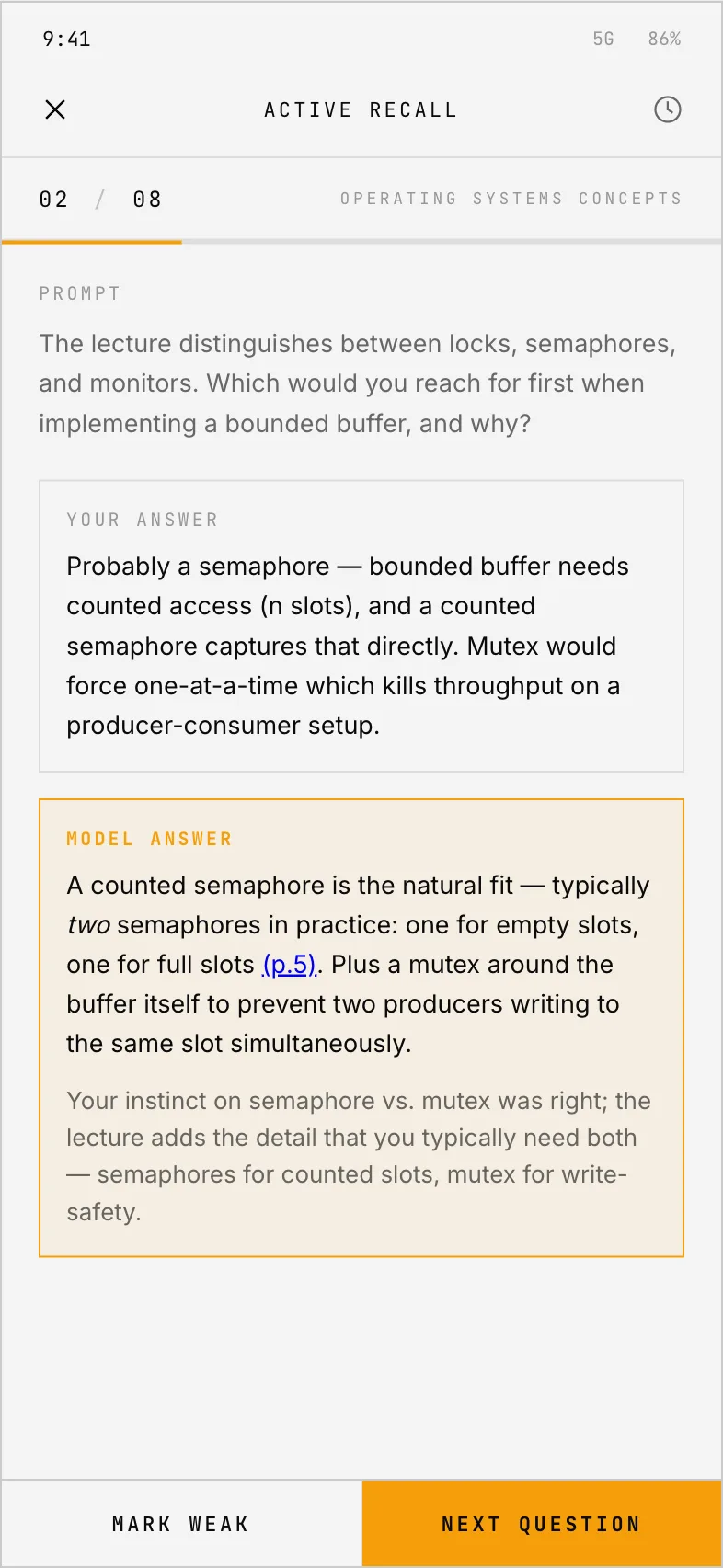
Active recall revealed: the student's answer against the model's

11The reveal

Your answer against the model's, and you do the grading.

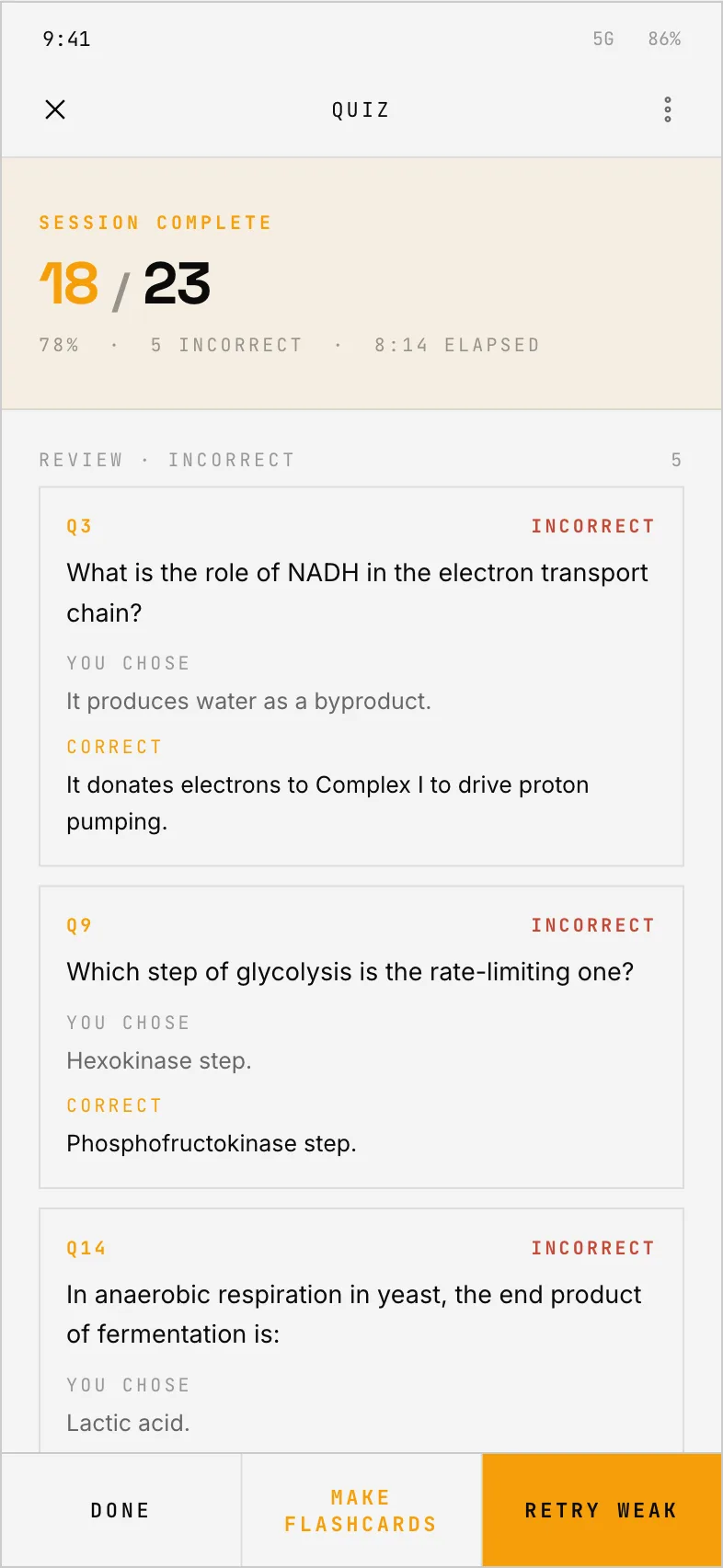
A finished quiz session with the misses reviewed

12The quiz

The misses are named, and they can become flashcards.

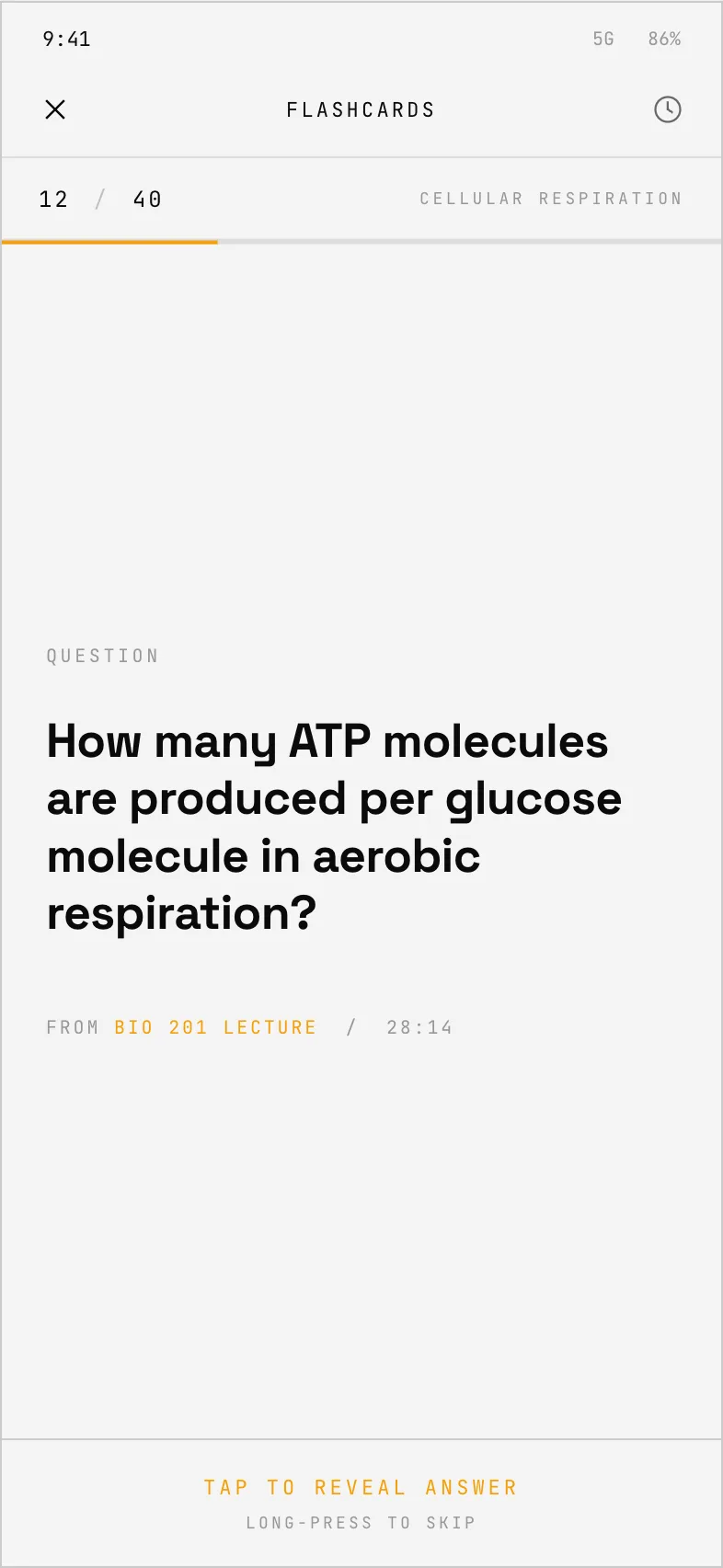
A flashcard front, scheduled by spaced repetition

13Spaced repetition

The deck surfaces cards when forgetting is most likely.

The explain-it-back drawer, recording an explanation aloud

14Explain it back

Say it out loud, the way you would to a friend who missed the lecture.

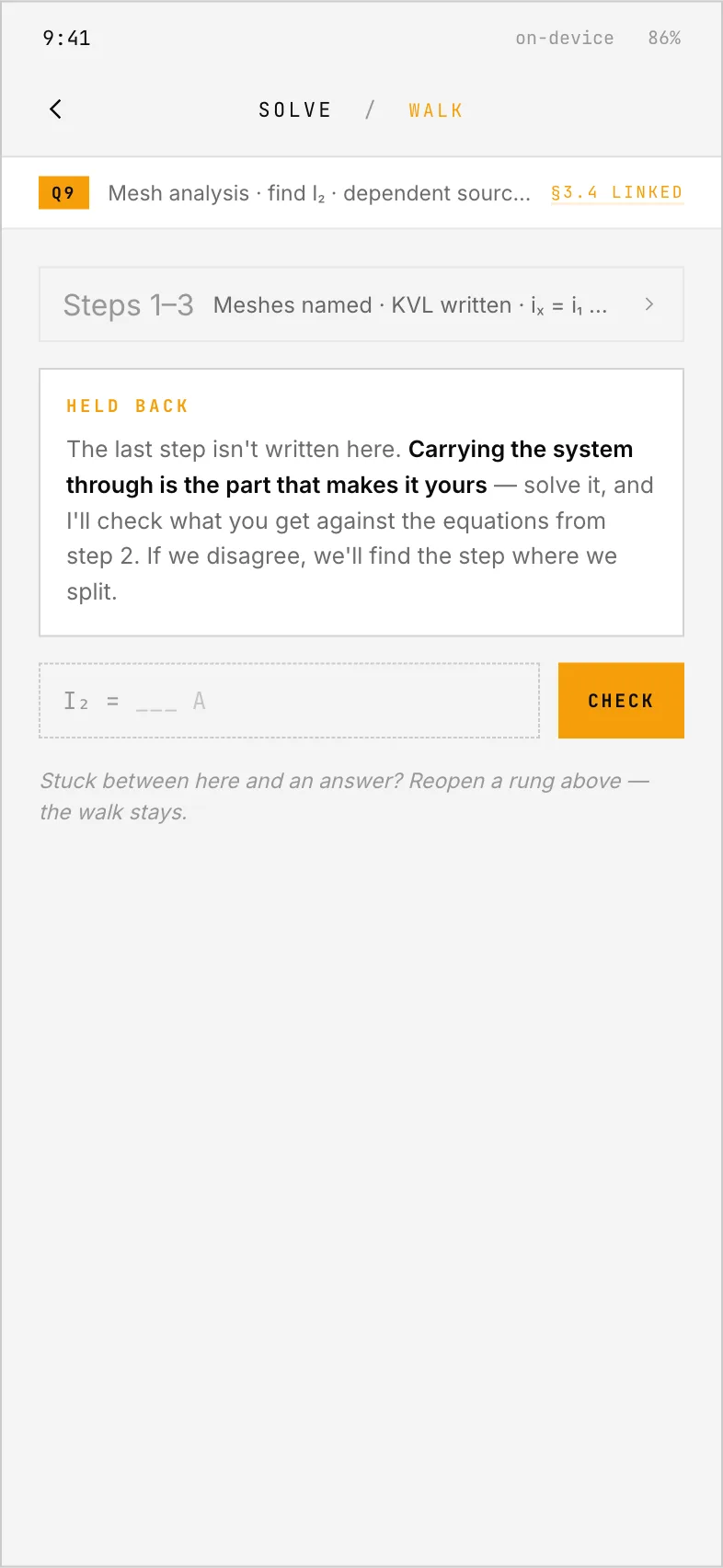
The solve walk holding back the last step

15The solve walk

A photographed past-paper question, worked step by step, the last step held back.

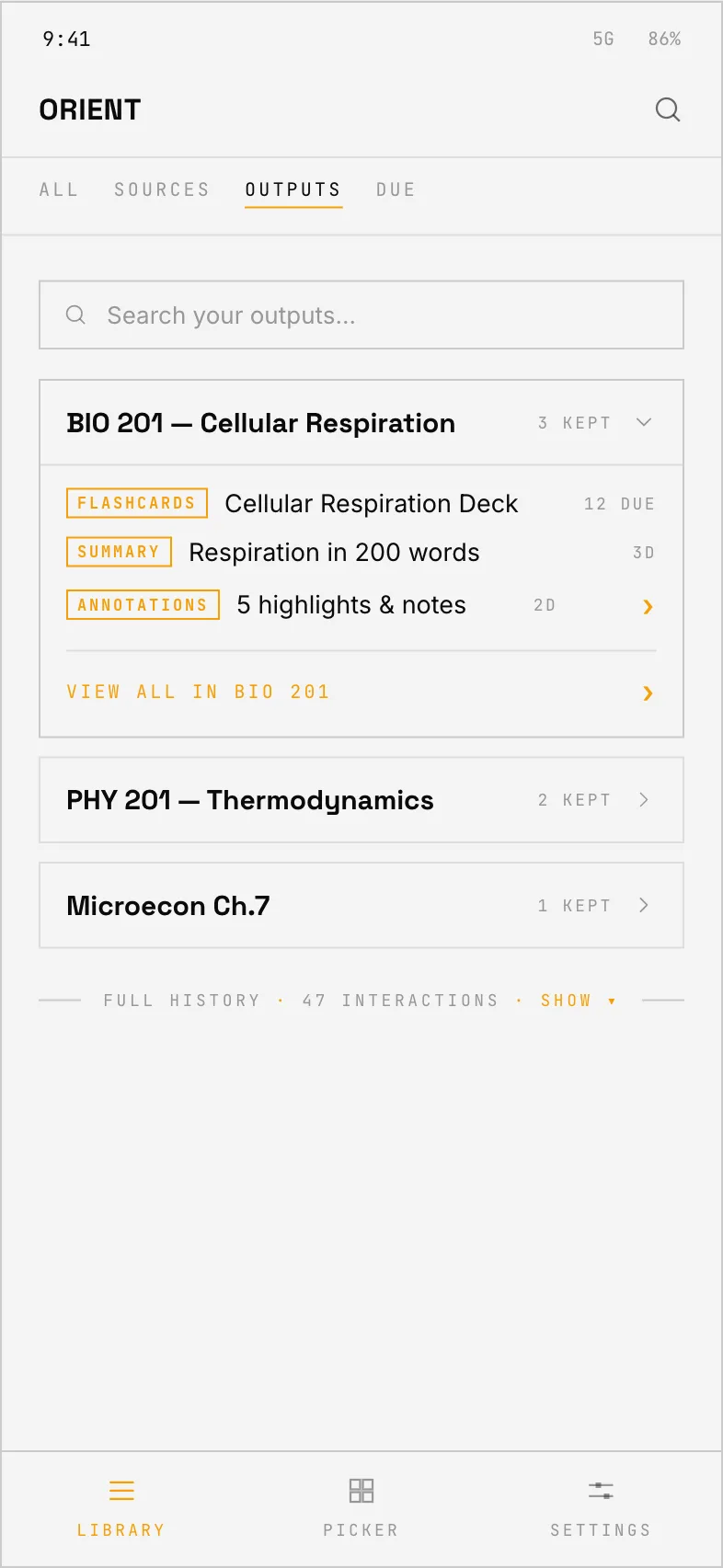
The library's outputs view: kept work grouped by source

16Your work, kept

By Friday, everything the week produced is still there, grouped under its source.

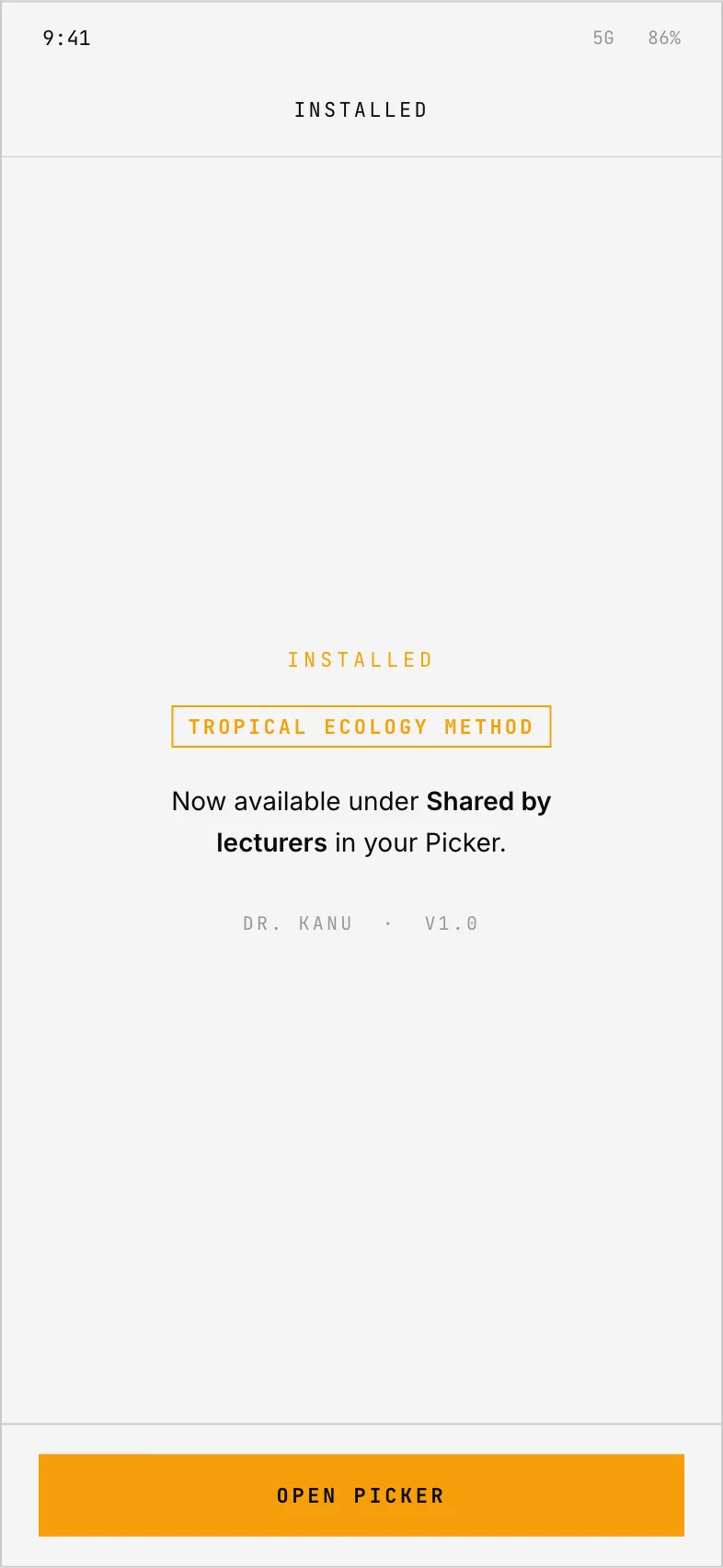
A lecturer's skill installed, available under Shared by lecturers

17Lecturer skills

A method written in plain English, shared once in the group, and now installed.

The results

Product and direction:
Theodore Rogers
Studio:
Atheam Technologies
On-device model:
Gemma via LiteRT-LM
Stage:
In build, demoing 2026

Want outcomes like this?

Get in touch
WinnerGemma 4 Challenge — writing
0Bars of signal required
[ METRIC — PENDING VERIFICATION ] Institutional pilots

What it is for

A tool for learning, not a tool for cheating.

A lot of products in this space build engagement through pressure: streaks that punish you for missing a day, and notifications engineered to pull you back. All of it is anxiety dressed up as motivation, and it cannot be the engine here. The reason a student keeps coming back has to be that using the app is making them more capable, and that they can feel it.

That does not mean refusing to be fun. Quizzes that play like games, friendly competition inside a study group, visible progress on a chapter: those are deliberate, and they matter most at university level where dry material is the enemy. The distinction is what they are for. A streak celebrates that you practised for ten days running; it does not guilt you back when you have not.

Where I want to take it next follows from that. Inside a single reading session Orient already reads the room: it knows where you slowed down, where you went back, when you have crossed enough material to be asked about it. What it does not do yet is carry that across sessions. The version I am building toward notices which mode actually produced recall a week later, which one this particular student keeps abandoning halfway, which one finally made a subject stick, and then stops offering a flat menu and starts pushing them toward what demonstrably works for them. Everyone learns differently, and the phone is the one thing patient enough to notice how. That layer is not built, and it only earns its place if it makes the student more capable rather than more managed.

So the measure of success is a third-year student who used Orient in their first year and still does, because they have got more capable every semester and the app is part of how that happened. The failure is someone who used it for a week, shipped a few assignments, and bounced, because we built a tool for cheating and they outgrew the cheat code instead of growing into the literacy. It is in build in Freetown, demoing in 2026, with first cohorts arriving through institutional pilots. If it works here, it works in Lagos, Nairobi, Dhaka and Manila, because the constraints here force the right design choices and the reverse is rarely true.

[ Keep scrolling — next case ]

Unfry